




























Views
Downloads

Essential Kindergarten Math: Counting and Addition Printable

Paste this activity's link or code into your existing LMS (Google Classroom, Canvas, Teams, Schoology, Moodle, etc.).
Students can open and work on the activity right away, with no student login required.
You'll still be able to track student progress and results from your teacher account.
This comprehensive Kindergarten math worksheet provides a structured approach to early numeracy skills through engaging garden-themed activities. By combining counting, number recognition, comparison, and addition into one printable set, students develop a cohesive understanding of how numbers function in real-world contexts.
At a Glance
- Grade: Kindergarten · Subject: Math
- Standard:
CCSS.MATH.CONTENT.K.CC.B.4— Count to tell the number of objects in a set- Skill Focus: Counting 1–20, Comparing Numbers, Picture Addition
- Format: 5 pages · 12 problems · Answer key included · PDF
- Best For: Independent math centers or morning work
- Time: 20–30 minutes
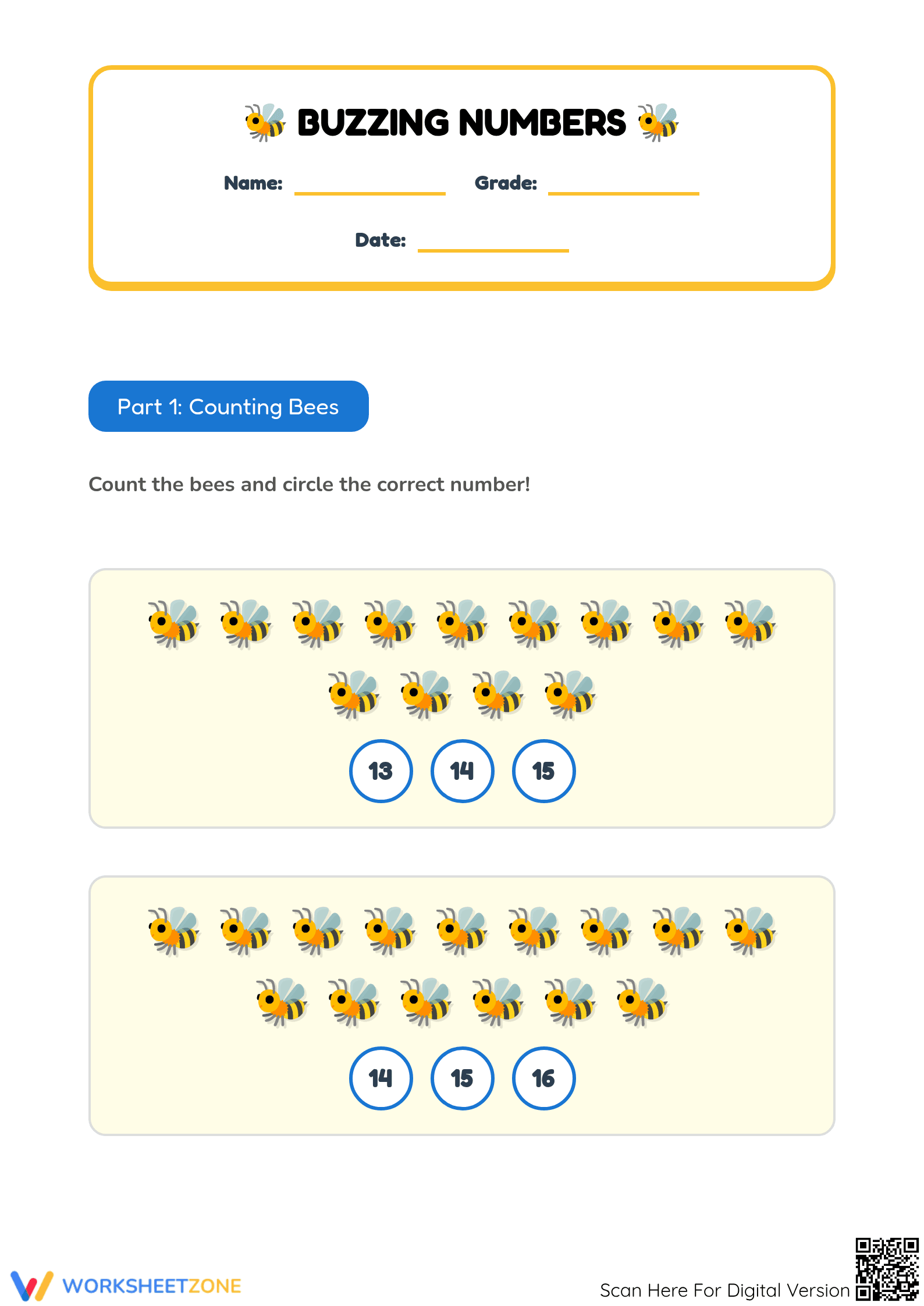
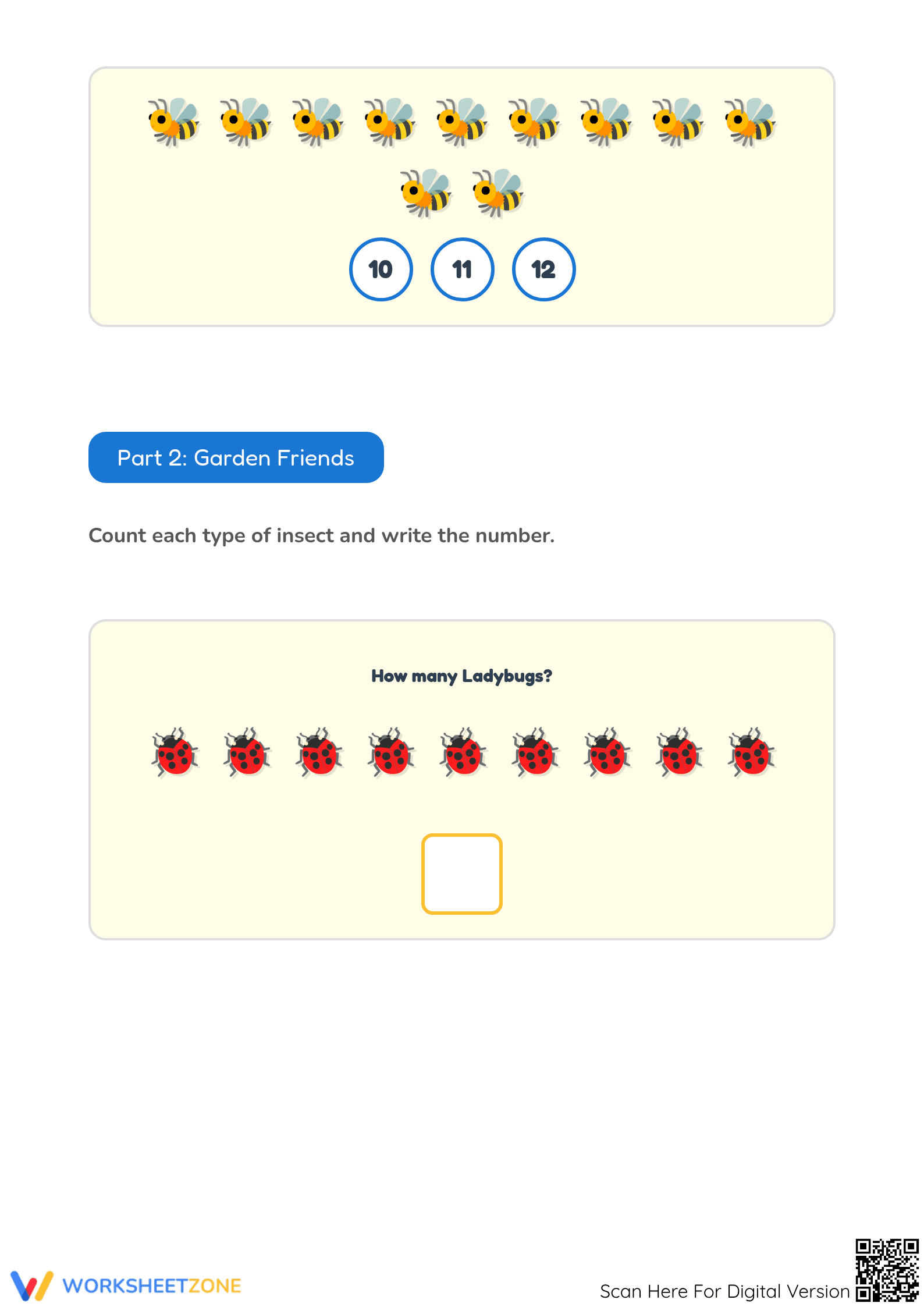
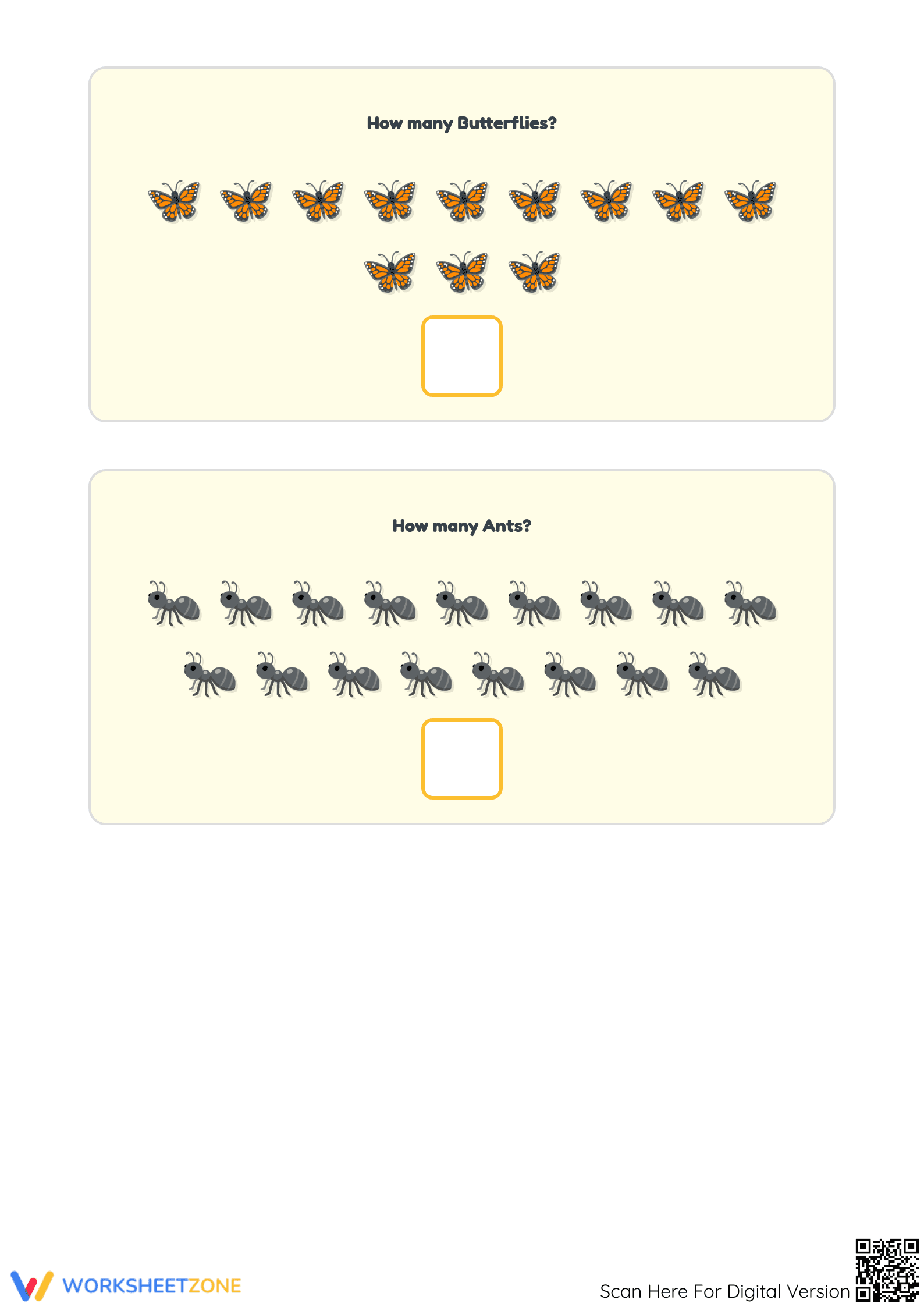
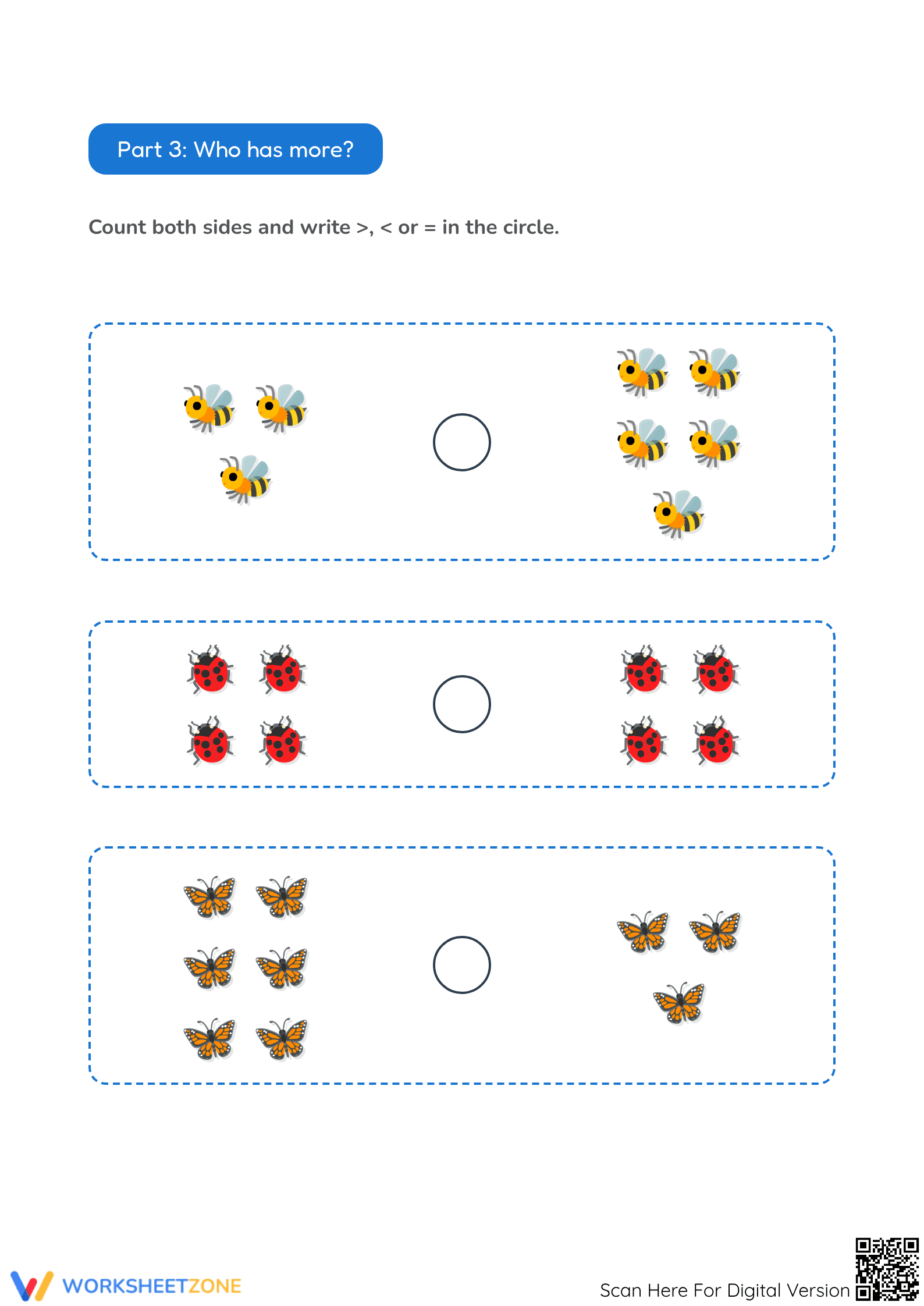
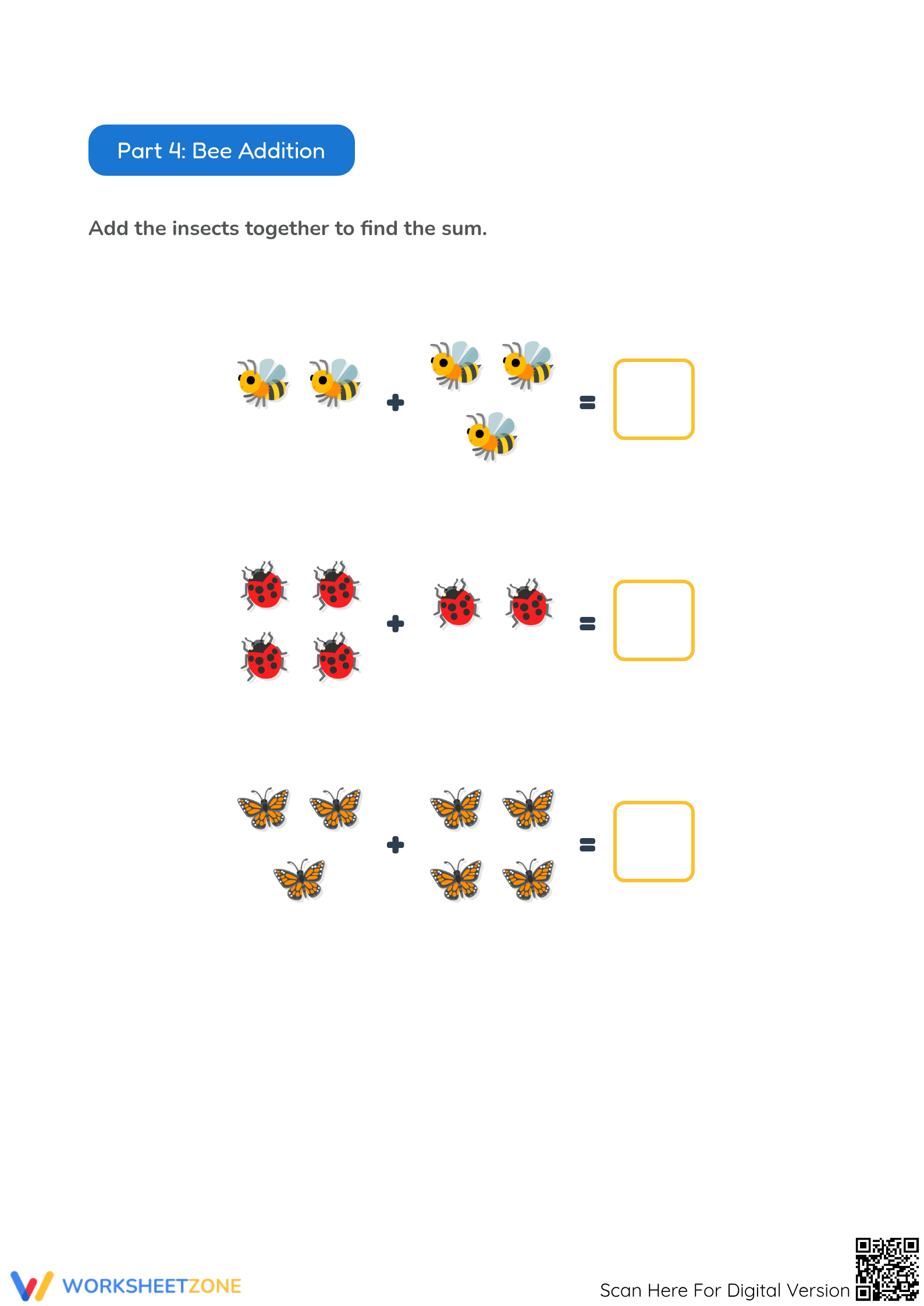
This 5-page PDF includes four distinct sections that guide learners through the "Buzzing Numbers" curriculum. Part one uses multiple-choice questions to reinforce counting up to 20, while part two requires students to write numerical values for groups of ladybugs and ants. Part three introduces quantitative comparison using symbols, and part four provides foundational addition practice using clear visual icons.
Zero-Prep Workflow
This resource is optimized for a zero-prep workflow in busy classrooms. First, print the five-page packet, which takes approximately thirty seconds per set. Second, distribute the materials to students during independent work time; no additional manipulatives are required as the visuals provide the necessary scaffolds. Third, review the work using the included answer keys to provide immediate feedback, requiring less than two minutes of teacher oversight.
Standards Alignment
This printable is fully aligned with CCSS.MATH.CONTENT.K.CC.B.4, which requires students to understand the relationship between numbers and quantities. It also supports CCSS.MATH.CONTENT.K.CC.C.6 through its comparison tasks and CCSS.MATH.CONTENT.K.OA.A.1 with visual addition. Both standard codes can be copied directly into lesson plans, IEP goals, or district curriculum mapping tools.
How to Use It
Use this worksheet as a summative assessment at the end of a unit on numbers 1–20 to verify student mastery. During instruction, teachers can observe if students are using one-to-one correspondence while counting the bees or ladybugs. It also serves as an excellent sub plan resource, as the clear headings and visual cues allow students to work with minimal teacher intervention for approximately 25 minutes.
Who It's For
This resource is ideal for Kindergarten students and early first-grade learners who need additional reinforcement of base-ten concepts. It specifically supports English Language Learners and students with IEPs by providing high-contrast visual supports. Pair this worksheet with a counting-themed picture book or a set of physical garden counters for a multi-sensory learning experience.
According to the RAND AIRS 2024 study on early childhood numeracy, the integration of multiple modalities—such as visual counting, symbolic comparison, and concrete addition—is critical for transitioning students from rote memorization to true mathematical fluency. This worksheet addresses these needs by scaffolding tasks from simple identification (CCSS.MATH.CONTENT.K.CC.B.4) to comparative analysis and operational logic. By using familiar garden-themed imagery like bees and ladybugs, the resource reduces cognitive load, allowing Kindergarten learners to focus on number relationships. Research indicates that structured, multi-part printables facilitate higher engagement levels compared to single-task sheets. This comprehensive math resource provides the exact evidence-based repetition required for mastery of foundational counting principles and early algebraic thinking. Educators can utilize these five pages to bridge the gap between concrete counting and abstract arithmetic, ensuring a robust developmental pathway for students entering the first-grade curriculum.


